Buy donev.eu ?
We are moving the project
donev.eu .
Are you interested in purchasing the domain
donev.eu ?
domain@kv-gmbh.de · 0541-91531010
Buy donev.eu ?
Is the inverse function of a bijective function also bijective?
Yes, the inverse function of a bijective function is also bijective. This is because a bijective function is both injective (one-to-one) and surjective (onto), meaning that each element in the domain maps to a unique element in the codomain and every element in the codomain is mapped to by an element in the domain. Therefore, the inverse function will also be injective and surjective, making it bijective as well. **
If g and g^(-1) are bijective, is f also bijective?
If g and g^(-1) are bijective, it means that g is a bijection and its inverse g^(-1) is also a bijection. In this case, if f is composed with g and g^(-1), then f is also bijective. This is because composing f with a bijection and its inverse will preserve the bijectivity of f. Therefore, if g and g^(-1) are bijective, then f will also be bijective. **


Similar search terms for Bijective
Top-Angebote
Products related to Bijective:
-
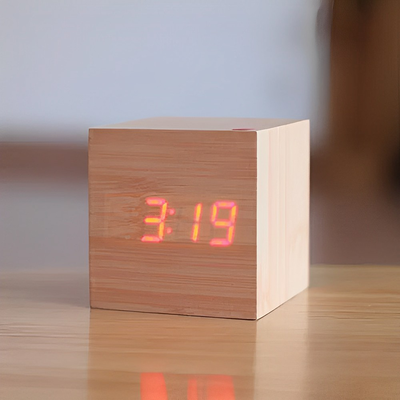
HomeDecorAndMore LLC Sleek & Stylish Wooden Cube Clock Black Blue LightLooking for a modern alarm clock that fits perfectly with the aesthetic of your room decor Say hello to our digital clock that offers a sleek and contemporary design, taking you out of the 19thcentury and into the 21st! This clock combines...28,97 $*Shipping: 0,00 $Secure redirect to the provider
-
Sagebrook Home Ceramic Vase, Versatile Home Accents for Stylish DecorSimplicity never goes out of style! Add this pretty and stylish vase to any home or office for a trendy, easy style upgrade. This particular vase comes in a unique grooved design in a solid color.44,23 $*Shipping: 0,00 $Secure redirect to the provider




-
If an inverse function of a bijective function exists, is it also bijective?
Yes, if an inverse function of a bijective function exists, then it is also bijective. This is because a bijective function is both injective (one-to-one) and surjective (onto), and its inverse will also be injective and surjective. Therefore, the inverse function will also be bijective. **
-
What is the function bijective?
The function bijective, also known as a one-to-one correspondence, is a type of function that is both injective and surjective. This means that for every element in the domain, there is a unique element in the codomain that it maps to, and every element in the codomain is mapped to by at least one element in the domain. In other words, a bijective function establishes a one-to-one and onto relationship between the domain and the codomain, ensuring that every element has a unique counterpart and no element is left out. This property makes bijective functions useful in various mathematical and computational contexts, such as cryptography, data compression, and permutation algorithms. **
-
When is a function bijective?
A function is bijective when it is both injective and surjective. In other words, a function f: A → B is bijective if every element in the codomain B is mapped to by exactly one element in the domain A, and every element in the codomain B is mapped to by at least one element in the domain A. This means that every element in the codomain has a unique pre-image in the domain, and every element in the codomain is mapped to by the function. **
-
What is a bijective mapping?
A bijective mapping is a function between two sets that is both injective and surjective. In other words, every element in the domain is paired with a unique element in the codomain, and every element in the codomain is paired with at least one element in the domain. This means that there is a one-to-one correspondence between the elements of the two sets. Bijective mappings are also known as one-to-one and onto functions. **

What is the relation of bijective mappings?
Bijective mappings are a type of function that establishes a one-to-one correspondence between the elements of two sets. This means that for every element in the first set, there is a unique corresponding element in the second set, and vice versa. In other words, a bijective mapping is both injective (one-to-one) and surjective (onto). This property makes bijective mappings useful for establishing a one-to-one correspondence between two sets, and they are often used in various mathematical and scientific applications. **
When is a matrix injective, surjective, bijective?
A matrix is injective if its columns are linearly independent, meaning that the only solution to the equation Ax=0 is x=0. A matrix is surjective if its columns span the entire codomain, meaning that for every element in the codomain, there exists at least one vector x such that Ax=b. A matrix is bijective if it is both injective and surjective, meaning that it has a unique solution for every element in the codomain. **
Top-Angebote
Products related to Bijective:
-
GDFStudio - Emma Sleek Modern 4-Drawer Black Dresser with Handle-Free Design for Versatile StorageContemporary Minimalist Style: This 4-drawer dresser features a clean, handle-free design paired with a rich black finish that adds a sophisticated and streamlined look to any room.202,99 $*Shipping: 0,00 $Secure redirect to the provider
-
Sagebrook Home "Metal Modern Glam Bowl Sleek Curved Design Stylish Sculptural Form - 20.0"""This modern glam metal bowl brings a sculptural touch to any tabletop decoration, this metal bowl comes in gold, ivory and tan providing thoughtful decorative use making it an effortless accent for a living room, kitchen, or dining room table.119,26 $*Shipping: 0,00 $Secure redirect to the provider
-
HomeDecorAndMore LLC Sleek & Stylish Wooden Cube Clock Black Blue LightLooking for a modern alarm clock that fits perfectly with the aesthetic of your room decor Say hello to our digital clock that offers a sleek and contemporary design, taking you out of the 19thcentury and into the 21st! This clock combines...28,97 $*Shipping: 0,00 $Secure redirect to the provider
-
Is the inverse function of a bijective function also bijective?
Yes, the inverse function of a bijective function is also bijective. This is because a bijective function is both injective (one-to-one) and surjective (onto), meaning that each element in the domain maps to a unique element in the codomain and every element in the codomain is mapped to by an element in the domain. Therefore, the inverse function will also be injective and surjective, making it bijective as well. **
-
If g and g^(-1) are bijective, is f also bijective?
If g and g^(-1) are bijective, it means that g is a bijection and its inverse g^(-1) is also a bijection. In this case, if f is composed with g and g^(-1), then f is also bijective. This is because composing f with a bijection and its inverse will preserve the bijectivity of f. Therefore, if g and g^(-1) are bijective, then f will also be bijective. **
-
If an inverse function of a bijective function exists, is it also bijective?
Yes, if an inverse function of a bijective function exists, then it is also bijective. This is because a bijective function is both injective (one-to-one) and surjective (onto), and its inverse will also be injective and surjective. Therefore, the inverse function will also be bijective. **
-
What is the function bijective?
The function bijective, also known as a one-to-one correspondence, is a type of function that is both injective and surjective. This means that for every element in the domain, there is a unique element in the codomain that it maps to, and every element in the codomain is mapped to by at least one element in the domain. In other words, a bijective function establishes a one-to-one and onto relationship between the domain and the codomain, ensuring that every element has a unique counterpart and no element is left out. This property makes bijective functions useful in various mathematical and computational contexts, such as cryptography, data compression, and permutation algorithms. **
Similar search terms for Bijective
-
Sagebrook Home Ceramic Vase, Versatile Home Accents for Stylish DecorSimplicity never goes out of style! Add this pretty and stylish vase to any home or office for a trendy, easy style upgrade. This particular vase comes in a unique grooved design in a solid color.44,23 $*Shipping: 0,00 $Secure redirect to the provider
-
HomeDecorAndMore LLC Sleek & Stylish Wooden Cube Clock Oak Orange LightLooking for a modern alarm clock that fits perfectly with the aesthetic of your room decor Say hello to our digital clock that offers a sleek and contemporary design, taking you out of the 19thcentury and into the 21st! This clock combines...28,97 $*Shipping: 0,00 $Secure redirect to the provider
-
HomeDecorAndMore LLC Sleek & Stylish Wooden Cube Clock White White LightLooking for a modern alarm clock that fits perfectly with the aesthetic of your room decor Say hello to our digital clock that offers a sleek and contemporary design, taking you out of the 19thcentury and into the 21st! This clock combines...28,97 $*Shipping: 0,00 $Secure redirect to the provider
-
When is a function bijective?
A function is bijective when it is both injective and surjective. In other words, a function f: A → B is bijective if every element in the codomain B is mapped to by exactly one element in the domain A, and every element in the codomain B is mapped to by at least one element in the domain A. This means that every element in the codomain has a unique pre-image in the domain, and every element in the codomain is mapped to by the function. **
-
What is a bijective mapping?
A bijective mapping is a function between two sets that is both injective and surjective. In other words, every element in the domain is paired with a unique element in the codomain, and every element in the codomain is paired with at least one element in the domain. This means that there is a one-to-one correspondence between the elements of the two sets. Bijective mappings are also known as one-to-one and onto functions. **
-
What is the relation of bijective mappings?
Bijective mappings are a type of function that establishes a one-to-one correspondence between the elements of two sets. This means that for every element in the first set, there is a unique corresponding element in the second set, and vice versa. In other words, a bijective mapping is both injective (one-to-one) and surjective (onto). This property makes bijective mappings useful for establishing a one-to-one correspondence between two sets, and they are often used in various mathematical and scientific applications. **
-
When is a matrix injective, surjective, bijective?
A matrix is injective if its columns are linearly independent, meaning that the only solution to the equation Ax=0 is x=0. A matrix is surjective if its columns span the entire codomain, meaning that for every element in the codomain, there exists at least one vector x such that Ax=b. A matrix is bijective if it is both injective and surjective, meaning that it has a unique solution for every element in the codomain. **
* All prices are inclusive of VAT and, if applicable, plus shipping costs. The offer information is based on the details provided by the respective shop and is updated through automated processes. Real-time updates do not occur, so deviations can occur in individual cases. ** Note: Parts of this content were created by AI.